
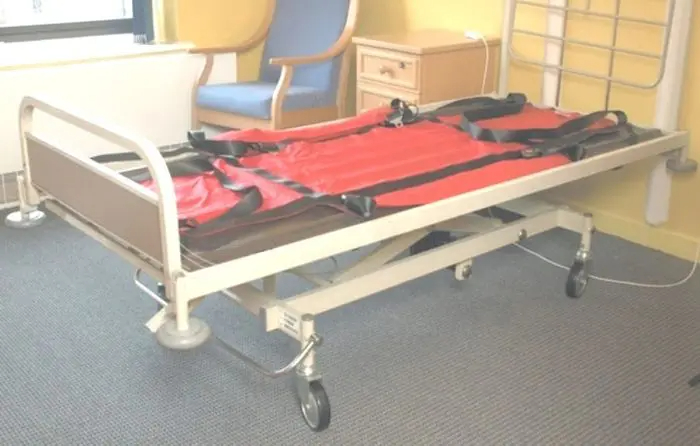
Hospitals are meant to be safe havens, but they must also be fortified against the unexpected. Disasters such as fires, floods, earthquakes, or power outages can strike without warning, disrupting critical care and placing vulnerable patients in immediate danger. In these high-stakes moments, a well-designed emergency plan is the difference between life and death. Among the essential tools for such plans, evacuation sheets have emerged as a must-have—simple, affordable, and remarkably effective. Unlike bulky stretchers or wheelchairs that require time-consuming patient transfers, evacuation sheets allow caregivers to move patients swiftly and safely, directly from their beds. This post explores why evacuation sheets are indispensable for hospital emergency preparedness, and how they protect both patients and staff when every second counts.
1. What Are Evacuation Sheets and Why Do They Matter?
Evacuation sheets (also called patient evacuation mats or rescue sheets) are specially designed fabric panels that are placed under a patient’s mattress. They feature integrated straps, handles, or a full-body sleeve that allows one or two staff members to quickly drag the patient—mattress and all—out of danger. Made from reinforced, fire-resistant materials, these sheets are lightweight yet strong enough to support patients of varying body weights. Unlike traditional lifting equipment, evacuation sheets require no transfer of the patient, eliminating the risk of drops or injury during movement. Their compact design means they can be stored under mattresses or in bedside drawers, always ready for immediate use.
2. Speed and Simplicity: Enabling Rapid Evacuation
In an emergency, speed is the most critical factor. Evacuation sheets streamline the evacuation process by removing the need to locate a stretcher, wheel a bed through narrow corridors, or transfer a patient manually. With a simple pull on the handles, the patient glides out of the room, guided by a single caregiver. This rapid deployment is especially valuable in scenarios such as a fast-spreading fire, a toxic gas leak, or a structural collapse where delays of even a minute can be deadly. Studies have shown that evacuation with a dedicated sheet can reduce patient movement time by up to 70% compared to traditional methods, allowing entire floors to be cleared in minutes rather than hours.
3. Universal Accessibility: Protecting All Patient Populations
Hospitals care for an incredibly diverse patient mix—from ambulatory individuals to those who are bedridden, sedated, or connected to life-support equipment. Evacuation sheets are uniquely suited to handle this variety. For non-ambulatory patients, the sheet provides a safe cocoon that can incorporate IV lines, ventilators, and monitors without disconnection. For bariatric patients, heavy-duty models distribute weight evenly and prevent staff strain. For pediatric or neonatal patients, smaller sheets ensure gentle handling. This universal adaptability means that no patient is left behind during an evacuation, a key requirement of both ethical care and regulatory compliance.
4. Reducing Staff Burden and Enhancing Team Efficiency
During an emergency, hospital staff are under extreme physical and emotional pressure. Evacuation sheets reduce the physical demands of patient transport by eliminating heavy lifting and awkward postures. Where a manual transfer might require four or five staff members, an evacuation sheet can be operated by just one or two, freeing up others to handle critical tasks such as fire suppression, triage, or communication. The reduced physical strain also lowers the risk of caregiver injury during the evacuation itself—a hidden but significant benefit. When staff feel capable and safe, they can act decisively, which directly improves patient outcomes.
5. Seamless Integration into Existing Emergency Plans
A common barrier to adopting new emergency equipment is the complexity of training and integration. Evacuation sheets overcome this hurdle with exceptional simplicity. They require minimal training—often just a 10-minute demonstration—and can be pre-deployed under patient mattresses in every room. Most models come with clear visual instructions printed on the sheet itself. This ease of deployment means hospitals can achieve a high level of preparedness without overhauling their procedures. Furthermore, evacuation sheets complement other equipment (stretchers, stair chairs, sleds) and can serve as a primary tool for horizontal evacuation or a backup for vertical evacuations down stairwells.
6. Cost-Effectiveness and Storage Efficiency
Budget-conscious healthcare facilities often struggle to balance preparedness with financial constraints. Evacuation sheets are remarkably affordable, typically costing a fraction of powered evacuation devices or specialized stretchers. Their low profile also solves storage problems: they can be folded flat, rolled up, or left in place under a mattress, requiring virtually no dedicated storage space. This makes them accessible to clinics, nursing homes, and small hospitals that may lack the budget for large-scale emergency equipment. A single purchase of evacuation sheets can cover an entire wing, providing a high return on investment when measured against potential loss of life or liability.
7. Compliance with Safety Standards and Accreditation
Healthcare facilities face rigorous safety regulations from bodies such as the Joint Commission (TJC), NFPA, and local fire codes. Evacuation sheets directly support compliance with requirements for patient evacuation capabilities, especially for non-ambulatory populations. Including them in a hospital’s emergency operations plan demonstrates proactive risk management and a commitment to patient-centered safety. In the event of an audit or post-incident review, having evacuation sheets available and staff trained on their use can mitigate legal exposure and reinforce the facility’s reputation as a prepared and responsible institution.
8. Conclusion: Preparedness That Saves Lives
When disaster strikes, a hospital’s ability to evacuate patients quickly and safely can mean the difference between a controlled response and a tragic outcome. Evacuation sheets are a small, inexpensive, and highly effective tool that should be a non-negotiable part of every hospital emergency plan. They empower staff to act with speed and confidence, protect patients of all acuity levels, and integrate seamlessly into existing workflows. By investing in evacuation sheets, hospitals send a clear message: that the safety of every patient and every caregiver is a top priority. In a world where emergencies are unpredictable, this simple tool ensures that hospitals remain places of healing—even in the face of chaos.