
Introduction: Hospitals Face a Growing Safe-Handling Crisis
US hospitals are experiencing a dramatic rise in caregiver injuries—especially musculoskeletal disorders (MSDs) caused by lifting, turning, repositioning, and laterally transferring patients. According to the US Bureau of Labor Statistics, nursing staff experience one of the highest injury rates in the nation.
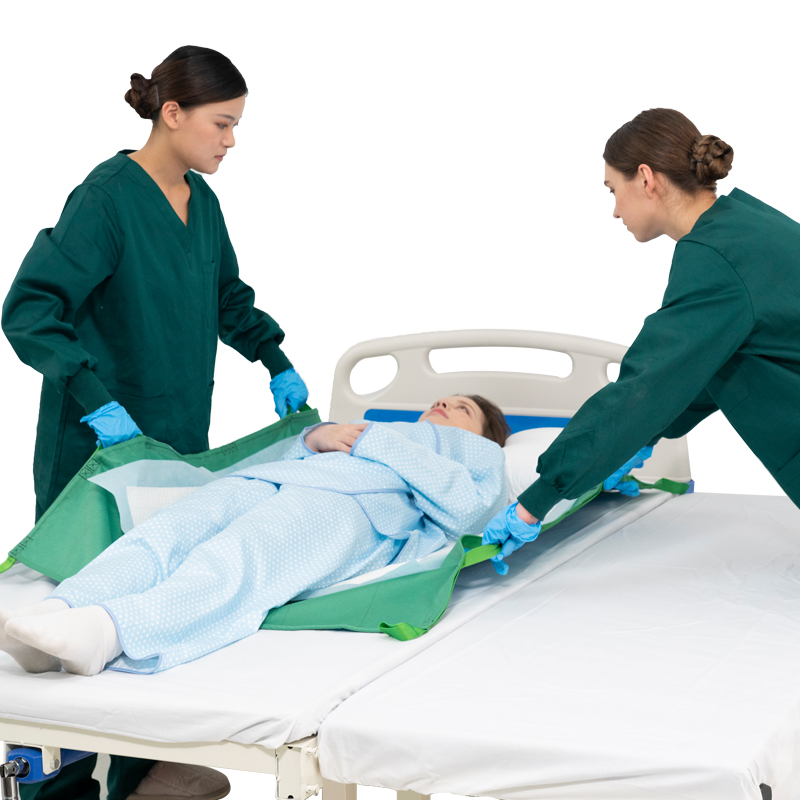
To address this crisis, hospitals increasingly rely on transfer boards and transfer sheets—simple, effective tools that dramatically reduce physical strain. This article explains how these tools prevent injury and what US healthcare buyers should look for when sourcing.
I. Why Transfer Boards & Sheets Are Critical
⚠️ 1. Rising Caregiver Injury Rates
Nurses regularly perform lateral transfers, boosting, and log rolling. Without equipment, these movements impose excessive spinal loading. Transfer aids significantly reduce shoulder strain, lower-back injuries, and lost workdays.
⚠️ 2. Increasing Patient Weight & Complexity
With the rise in bariatric, post-surgical, and immobile ICU patients, manual lifting is often unsafe and prohibited by modern protocols.
⚠️ 3. OSHA & SPHM Compliance
OSHA and ANA Safe Patient Handling & Mobility (SPHM) guidelines mandate the use of friction-reducing devices. Transfer boards and sheets are now essential—not optional.
II. Types of Transfer Boards & Sheets
Low-Friction Transfer Sheets
Reusable or Disposable
- Bed-to-bed transfers
- Lateral slides & Repositioning
- Polyester/Nylon construction
- Reinforced stitching
- Multi-handle variants
Transfer Boards
Rigid or Semi-Rigid
- Bridging gaps (Bed to Stretcher)
- Supporting minimal mobility
- High-density plastic
- Radiolucent options
Hybrid Systems
Specialty Care
- Combines fabric & rigid core
- Bariatric patient support
- ICU complex transfers
III. How They Reduce Injuries
- ✅ Reduction in Friction = Reduced Spinal Load: Low-friction materials reduce the force required for lateral movement by 60–80%.
- ✅ Multi-Handle Ergonomics: Handles allow better grip and body positioning, distributing the load evenly.
- ✅ Safer Two-Person Technique: Enables coordinated movement and proper spine alignment, preventing sudden load shifts.
- ✅ Faster Transfers: Quicker movement means less exposure to risk, lower fall risk, and improved patient comfort.
IV. What US Hospitals Look for When Purchasing
Distributors must ensure products meet these stringent requirements:
1. Load Rating & Testing
Tensile strength, cycle testing, and handle load tests are mandatory, especially for repositioning sheets.
2. Friction Performance
Verification of Coefficient of Friction (COF) and durability after washing (for reusable types).
3. Infection Control
Must withstand industrial laundry temps (reusable) or use high-quality nonwoven materials (disposable).
4. Size Options
Common sizes: 39×71 (Standard), 45×71 (Bariatric), and ICU specific versions.
Conclusion
Transfer boards and sheets are vital for US hospitals seeking to protect caregivers and comply with SPHM guidelines. Combined with multi-origin manufacturing and unified global quality systems, healthcare distributors can reliably supply hospitals with high-performance equipment—regardless of global disruptions.
Source SPHM Equipment Reliability
Contact Yearstar for a quote on tariff-optimized Transfer Boards and Sheets.