
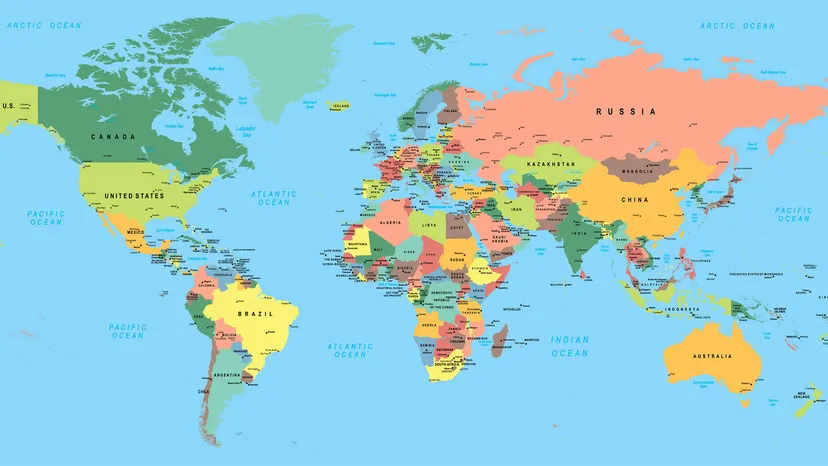
How China, Thailand, Vietnam, Cambodia, Mexico(Planned), and Turkey(Planned) Create a Tariff-Proof, Risk-Resilient Manufacturing Network for US Healthcare Buyers
Introduction: A Changing Landscape for US Healthcare Distribution
US healthcare distributors face increasing uncertainty driven by regulatory changes, tariff volatility, supply chain disruptions, and shifting geopolitical conditions. Hospitals, long-term care (LTC) facilities, and EMS providers demand faster delivery, stable availability, and consistent pricing—yet traditional single-country sourcing models can no longer keep pace with these pressures.
To adapt, leading US distributors are shifting toward multi-origin manufacturing, leveraging production capabilities across China, Thailand, Vietnam, Cambodia, Mexico(Planned), and Turkey(Planned). This approach provides a more resilient and cost-stable supply chain while ensuring compliance with US tariff regulations and healthcare quality expectations.
This article outlines the strategic reasons US importers increasingly rely on multi-origin supply networks and why a diversified global footprint is now a competitive necessity.
I. The Risks of Single-Country Sourcing
Relying on a single origin—especially for medical textiles, patient handling products, and soft goods—creates multiple exposure points:
1. Tariff Vulnerability
US tariff rules fluctuate based on political cycles, trade negotiations, and Section 301 updates. Products from a single origin may suddenly become:
- Subject to additional import duties.
- Impacted by retaliatory tariffs.
- Reclassified under new HS codes.
- Affected by “fentanyl-related” tariff categories.
- Exposed to future “reciprocal tariff” mechanisms.
Solution: A multi-origin strategy allows importers to immediately shift production to tariff-neutral countries.
2. Supply Chain Disruptions
Recent years have seen major disruptions including port congestion, pandemic shutdowns, regional conflicts, and raw material price spikes. When all production comes from a single country, any disruption can halt deliveries completely.
3. Capacity Bottlenecks
Large US distributors require 5–10+ containers monthly with consistent AQL quality. No single factory—or even single country—can guarantee uninterrupted output during peak season. A distributed network scales more effectively.
II. Benefits of a Six-Country Manufacturing Network
A multi-origin model, built across China + Thailand + Vietnam + Cambodia + Mexico(Planned) + Turkey(Planned), provides unmatched flexibility for US healthcare buyers.
1. Tariff-Proof Flexibility
If tariffs rise in one country, production can shift to another without changing product quality, specifications, or compliance files. This protects margin, pricing stability, and long-term tender contracts.
2. Stable Lead Times & Logistics Options
Having production in both Asia and North America spreads transit risk:
- Asia: → West Coast / East Coast
- Mexico: → Laredo cross-border (Truck)
- Turkey: → Europe–US fast lanes
3. Consistent Quality Across Countries
Modern multi-origin manufacturers use shared SOPs, unified testing standards, and ISO 13485-aligned processes. This guarantees all origins produce the same quality, stitching, and load rating.
4. Risk Diversification
A diversified supply chain mitigates political risk, regulation changes, and supplier dependency. This stability is critical for medical device categories where backorders directly affect patient care.
III. Which Medical Product Categories Benefit Most?
These categories require high labor content, strict QC, and tariff-sensitive HS codes—making multi-origin essential.
🏥 Patient Transfer Devices
- Transfer & Slide sheets
- Positioning slings
- Lateral transfer aids
🧵 Medical Textile Products
- Underpads & Draw sheets
- Reusable hospital linens
- Surgical towels & Bibs
🚑 Emergency & Tactical
- Evacuation stretchers
- Rescue slings & Kits
- EMS lightweight gear
🛏️ Beds & Mobility Accessories
- Safety straps & Belts
- Webbing-reinforced parts
- Mobility aids
IV. Why These 6 Countries? (Strategic Advantages)
- China: Advanced supply chain + complex textile capability.
- Thailand: Stable labor, strong medical manufacturing.
- Vietnam: Competitive cost + US tariff advantages.
- Cambodia: Cost-efficient manufacturing + strong textile workforce + supply chain diversification.
- Mexico(Planned): Nearshoring + fastest delivery to US.
- Turkey(Planned): Gateway to EU & US, strong textile tradition.
Together, they create a globally balanced, stable manufacturing ecosystem.
V. What US Distributors Should Do Next
- 1. Shift high-risk SKUs into multi-origin models: Especially items with Section 301 exposure.
- 2. Pre-approve at least 2–3 origins per SKU: Use identical SOPs and unified documentation.
- 3. Build long-term partnerships: Prioritize manufacturers with real factories across multiple countries.
- 4. Request tariff-breakdown scenarios: Model costs across all five origins.
- 5. Reduce dependency on any single geography: Ensure uninterrupted supply for tenders and GPO contracts.
Conclusion
Multi-origin manufacturing is no longer a “nice to have”—it is now the most reliable and cost-efficient sourcing model for US healthcare distributors. By diversifying production across China, Thailand, Vietnam, Mexico(Planned), and Turkey(Planned), importers can eliminate tariff exposure, stabilize lead times, improve risk resilience, and ensure consistent product quality.
As the US healthcare market becomes more demanding and regulations more unpredictable, distributors with global, flexible supply chains will be the ones who win long-term.
Start Your Multi-Origin Strategy Today
Contact Yearstar to receive a tariff analysis and multi-origin manufacturing proposal for your product line.